Tile Match puzzle - Tiletopia
- 4.9
- Rating
- 10.00M
- Installs
- Free
- Price

 Analysis by App-foxy
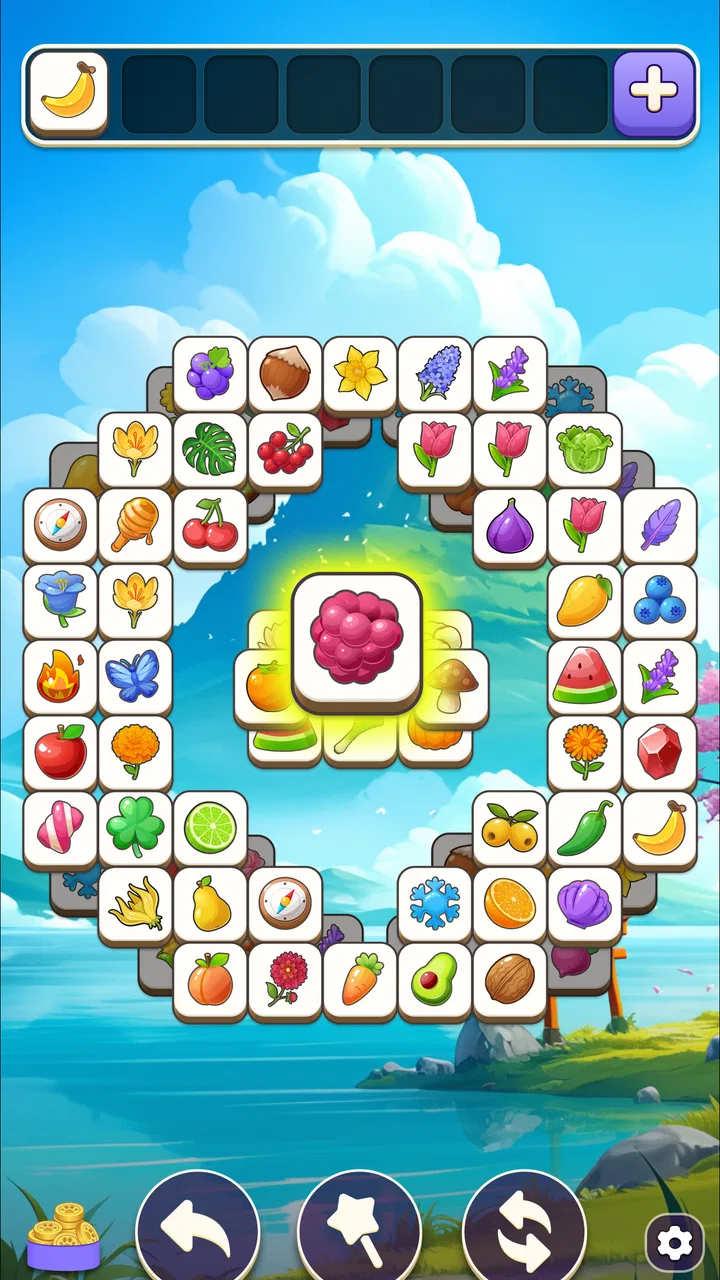
I found Tile Match puzzle - Tiletopia easy to understand within a few minutes, but not so shallow that the opening boards feel disposable. It is a free puzzle game from PlaySimple Games, built around matching tiles, and its simple presentation makes it a comfortable choice when I want something I can start without reading a long tutorial. The store summary asks whether you are the next Tile Match Master; in practice, the appeal is less about speed and more about noticing patterns before the board becomes crowded.
That distinction matters for first-time players. I would not approach this as a fast arcade challenge or as a traditional crossword-style brain game. It is closer to a relaxed visual sorting exercise, with each move asking me to decide which tiles are safe to collect and which ones are better left alone for later. The game is free to install and suitable for Everyone, so it is approachable for casual players and families, while optional in-app purchases range from $0.99 to $49.99 per item.
Getting comfortable with Tile Match puzzle - Tiletopia
I find that getting comfortable with Tile Match puzzle - Tiletopia is less about memorizing rules and more about building a steady scan-before-tapping habit. I’d give myself a few unhurried boards to notice how one choice changes the options left on screen, then use that rhythm to decide whether the game suits my breaks. That makes the next question—how to keep a short session satisfying—easier to answer.
You May Also Like

 Blood Strike: 2.5 Anniversary
Blood Strike’s Loadouts Turn Every Drop Into a Tactical Gamble
A close look at Blood Strike’s custom loadouts: how fast access to signature weapons reshapes its battle royale rhythm, rewards preparation, and narrows the gap between fights.

 Pandora - Music & Podcasts
Pandora’s Music Is Easy to Start, but Harder to Recover
Pandora’s strength is its low-effort path from a seed to a station. Its weak spot is how much confidence it asks you to place in connection, setup, and quiet recovery.

 8 Ball Pool
 Is Built on Rivalries, Rematches, and Routine
A close look at the rivalries, rematches, shared routines, and unanswered safety questions that turn a quick pool match into a persistent mobile community.

 Samsung Music
’s Quiet Strength Is Playing What You Already Own
Its reach comes less from spectacle than from dependable access to a personal library. That simplicity is both the app’s strongest retention engine and its ceiling.

 AccuWeather: Weather Radar
AccuWeather Review: A Quick, Clear Forecast for Everyday Decisions
For everyday plans, the best forecast is the one you can understand quickly. AccuWeather makes rain timing, radar, and local conditions easy to act on, with a few trade-offs.

 Hill Climb Racing
Why Hill Climb Racing Still Turns Crashes Into One More Run
A tiny car, a bumpy hill and one more upgrade: Hill Climb Racing keeps resurfacing because its simple chaos makes every near-miss feel personal.
More From Our News Desk



What the first launch feels like
The first thing I would tell a new player is not to rush through the opening screen. The game’s basic idea is familiar, but the useful skill is learning how the visible tiles interact with the available matching space. A matching game can look obvious when three similar pieces are exposed, yet taking them immediately may uncover a less helpful arrangement. I had better results when I treated every move as part of a short plan rather than tapping the first familiar image I saw.
There is no complicated character system or large rulebook to absorb before playing. That makes the entry point friendly, especially if you are downloading it for a short break. The game’s current version is 1.482.1, and it runs on devices using Android 8.0 or later. On a compatible phone, the practical preparation is simply to make sure the display is comfortable and that you have enough attention for a few deliberate choices.
I also recommend beginning with sound and notifications set to whatever suits your surroundings, rather than assuming the default experience will be ideal for everyone. I prefer a quiet puzzle session when I am commuting or waiting, while another player may enjoy more feedback. The important point is that Tiletopia works best when the board remains the focus. It is not a game I would open while trying to follow a conversation or handle another task at the same time.
Your first meaningful success
For a new player, the first satisfying moment comes from creating a match without accidentally blocking the next move. I start by scanning the whole board, looking for groups that are already partly exposed. Then I identify which tiles are sitting above other useful pieces. If one move can reveal several possibilities, I value it more than a match that merely clears a visible trio.
My practical opening routine is simple:
I scan for the clearest matching group instead of tapping randomly.
I check whether removing it exposes another tile that can be used soon.
I keep the temporary holding area from filling with unrelated pieces.
I pause after each match and reassess the complete board.
This approach gives the game a little more depth than its cheerful tile imagery might suggest. The first successful board is not only about recognizing identical pictures. It teaches the central trade-off: clearing something now can be helpful, but clearing the wrong thing can leave a difficult mixture that is harder to organize later.
When I am playing during a short everyday break, I use the first few moves to decide whether the board deserves concentration. If the available matches are clear, I can make steady progress while waiting for a coffee or sitting before an appointment. If the layout becomes crowded, I stop treating it as a background activity. That small change in mindset prevents many avoidable mistakes.
The confusion new players usually meet
The most common misunderstanding is assuming that every visible match is automatically the best match. Tile games often reward order, and Tiletopia is more enjoyable once I stop thinking only in terms of immediate removal. A tile that looks convenient may be covering a more useful piece, while a less obvious choice may open the board in a safer way.
Another source of confusion is the difference between seeing a possible match and having a workable sequence. I may notice three similar tiles, but if one is difficult to reach or taking it would fill the holding area with awkward leftovers, the match is not as valuable as it first appears. I learned to judge a move by what it leaves behind, not just by what disappears.
That is also why repeatedly tapping around the board is a poor habit. It feels active, but it does not improve my understanding of the layout. I get more from a two-second pause: identify the next match, identify the tile it might expose, and only then commit. This is one of the small habits that turns the game from a sequence of guesses into a manageable puzzle.
Players coming from match-three games may need to adjust expectations. There is no reason to look for cascading combinations or a constantly changing grid in the same way. Players coming from classic mahjong-style tile games may also find the emphasis different, because the key challenge here is not simply finding open pairs. The experience is more about collecting matching groups while protecting future options.
How I approach the next few boards
Once the opening rules feel natural, I recommend playing with a “future space” mindset. Before taking a match, I ask how many unrelated tiles I will be holding afterward and whether the next likely match is still accessible. This is especially useful when several tile types are mixed together. A clean-looking move can become a problem if it creates a pile of single pieces that do not connect with one another.
A second useful technique is to prioritize moves that improve visibility. If removing one group exposes multiple covered tiles, that action can be stronger than clearing a group that leaves the board almost unchanged. This is not a guaranteed solution for every layout, but it gives me a reliable way to choose when several matches seem equally attractive.
I also avoid spending every helpful action at once. When the board offers a comfortable match, I take it, but I do not immediately make several unexamined moves simply because the first one worked. The game rewards regular reassessment. A board can change enough after one collection that the plan I had a moment ago is no longer the best one.
For someone who wants a calmer session, this creates a pleasant rhythm: scan, choose, clear, pause, and scan again. For someone who wants constant intensity, that rhythm may feel slower than expected. Tiletopia’s strength is its accessible decision-making, not frantic pressure, so I would skip it if my ideal puzzle game requires rapid reactions or complex multi-step combos.
Where the game fits in daily life
My favorite use case is a ten-minute waiting period when I want more engagement than scrolling but less commitment than a long story-driven game. I can focus on a board, put the phone down, and return later without needing to remember a plot or a complicated control scheme. That makes it a natural fit for short breaks, although I still prefer to finish a move thoughtfully before switching away.
It can also work for players who enjoy visual organization. Matching familiar images gives the hands something simple to do, while the ordering decisions keep the mind involved. I would recommend it to a relative who wants a gentle puzzle with an immediate premise, provided they are comfortable with optional purchases and the possibility that later play may encourage more careful planning.
On the other hand, I would not choose it for a child who needs a completely distraction-free experience without purchase prompts, nor for someone looking for a deep competitive ranking system or a story campaign. The Everyone age rating makes the basic game broadly approachable, but an age label does not automatically mean every player will enjoy the same pacing or monetization model.
Free access and the purchase question
The free starting point is important because it lets me test whether the matching loop suits my habits before paying anything. That is a real advantage over a puzzle that demands an upfront purchase from a player who is not yet sure about the format. At the same time, optional in-app purchases are part of the experience, with individual items priced from $0.99 to $49.99.
My advice is to decide in advance whether you want a strictly free session. If so, treat any paid option as something to ignore rather than as a necessary part of every board. I find that a clear personal rule is easier than making an impulse decision after a frustrating layout. Players who are comfortable buying occasional help may appreciate the flexibility, while players who dislike any purchase prompts should choose a simpler offline puzzle alternative instead.
The trade-off is familiar in free mobile games: the low entry cost makes experimentation easy, but the surrounding purchase choices can affect how relaxed the session feels. That does not cancel out the core puzzle, but it should be part of the decision before installing. I would describe Tiletopia as best for someone who wants to begin free and is willing to manage optional spending consciously.
How it compares with other tile puzzles
Compared with a basic matching app that simply asks me to find identical objects, Tiletopia gives more importance to move order and board awareness. I get more satisfaction from planning a safe sequence than from tapping through obvious pairs. Compared with a classic mahjong solitaire game, it feels less focused on removing exposed pairs and more focused on building matching groups while managing what I have already selected.
Those differences make the game approachable without making it entirely automatic. A pure casual tapper may be better for someone who wants almost no mental effort. A traditional mahjong title may be better for someone who enjoys a strict open-tile structure. Tiletopia sits between those choices: the images and basic action are easy to grasp, but the board can still punish careless ordering.
I would also choose a more advanced puzzle game if I wanted explicit logic systems, elaborate level mechanics, or a strong competitive identity. Here, the pleasure comes from repeated small decisions and the gradual improvement of my scanning habits. That narrower focus is a benefit when I want something dependable, but a limitation if I need constant novelty.
Small habits that improve the experience
The first habit is to keep the holding area mentally organized. I do not need to memorize every tile, but I do need to notice which pieces are isolated and which ones are close to forming a group. When I collect a tile that has no obvious partner, I treat it as a warning to look for a safer sequence before adding more unrelated pieces.
The second is to use difficult boards as planning practice instead of immediately blaming luck. I review the last few choices and ask whether I ignored an exposed group, opened the wrong layer, or filled the available space too early. This turns a failed attempt into useful information and makes progress feel less dependent on guessing.
The third is to play in focused bursts. Because the rules are simple, it is tempting to continue while distracted, but that is exactly when I make careless selections. A short, attentive session usually feels better than a longer session in which I tap automatically and become frustrated by the result.
A fourth tip is to introduce the game to a new player by explaining the decision process rather than merely saying “match three.” The phrase describes the surface action but not the real challenge. I would show them how to look for exposed groups, preserve room for future matches, and reconsider the board after each collection. That explanation makes the first meaningful success arrive sooner and with less confusion.
Who should install it
I think Tiletopia is a good fit for first-time mobile puzzle players, fans of visual matching, and anyone who likes a compact game that can fill a waiting period without demanding a long tutorial. The developer, PlaySimple Games, has created an experience whose central action is immediately readable, while the ordering decisions give regular play enough substance to avoid feeling like pure decoration.
The high average rating of 4.9, based on around 185,000 ratings, and more than 10 million installs suggest that the format has reached a large audience. I do not treat those figures as a guarantee that every player will enjoy it, but they do make the game easier to consider when you want a well-established casual puzzle rather than an obscure experiment.
I would skip it if you dislike free-to-play purchase options, prefer games with no interruptions to your concentration, or want a puzzle that constantly introduces new rule systems. I would also look elsewhere if your priority is competitive play, narrative progression, or fast reflexes. Tiletopia is at its best when the goal is a calm but attentive matching session.
My recommendation after learning the loop
After getting past the first few boards, I found the game most rewarding when I stopped chasing the quickest visible match and started protecting the next move. That small adjustment is the main lesson I would pass to a friend: look beyond the tile you are about to remove. The board often tells you more when you pause long enough to notice what your choice will reveal and what it will leave stranded.
The best reason to try Tiletopia is its low barrier to entry paired with just enough planning to make familiar matching feel meaningful. It is free, rated for Everyone, and compatible with Android 8.0 or later, so the practical barrier is small. The real question is whether you enjoy careful visual sorting and can live with optional purchases in a free game.
My final view is positive but specific. I would install it for relaxed breaks, recommend it to someone new to tile puzzles, and use the early boards to build the habit of scanning before tapping. I would not present it as a deep strategy game or as a completely frictionless distraction. If you want a friendly puzzle that rewards patience, Tiletopia is worth trying; if you want speed, story, or elaborate systems, another category will serve you better.
FAQs for Tile Match puzzle - Tiletopia
01What is the main objective of Tile Match puzzle - Tiletopia?
Tile Match puzzle - Tiletopia is a strategic puzzle game where the main objective is to match three identical tiles to clear them from the board. Players must eliminate all tiles to complete each level, with increasing difficulty as they progress. The game challenges your problem-solving skills and offers hours of engaging gameplay.
02Are there any in-app purchases in Tiletopia?
Yes, Tile Match puzzle - Tiletopia offers in-app purchases. Players can buy additional hints, power-ups, or remove ads to enhance their gaming experience. While the game is free to download, these purchases can provide a more seamless experience, especially in more challenging levels.
03Does Tiletopia require an internet connection to play?
Tile Match puzzle - Tiletopia can be played offline, making it ideal for users who want to enjoy the game without an internet connection. However, certain features such as in-app purchases or social sharing may require internet access. Playing offline will not hinder the core gameplay experience.
04What platforms is Tile Match puzzle - Tiletopia available on?
Tile Match puzzle - Tiletopia is available on both Android and iOS platforms. Users can download it from the Google Play Store or the Apple App Store. It is designed to be compatible with most devices, ensuring a smooth gaming experience across different smartphones and tablets.
05Is Tile Match puzzle - Tiletopia suitable for all ages?
Tile Match puzzle - Tiletopia is designed to be family-friendly and suitable for players of all ages. The game does not contain any inappropriate content, making it a great choice for both kids and adults who enjoy puzzle games. Parents can feel confident allowing their children to play.
Pros
- Engaging and addictive gameplay.
- User-friendly interface and controls.
- Vibrant and colorful graphics.
- Regular updates with new levels.
- No intrusive ads during play.
Cons
- Limited free hints available.
- Some levels feel repetitive.
- Occasional app crashes reported.
- In-app purchases can be pricey.
- Battery drain on older devices.

Tile Match puzzle - Tiletopia
Gallery